
How to Start a Community Book Box at School
A community book box can help schools promote reading, improve access to books, and involve students, families, teachers, and parent associations in a simple shared project. The guide also explains who to contact, where to install the box, how to choose appropriate books, and what benefits schools can expect from creating a visible culture of reading and sharing.
SCHOOLS & READING
The HAVLYN Team
4/20/20265 min read
How to Start a Community Book Box at School
A Simple Project to Encourage Reading and Connection
Installing a community book box at a school is a simple way to make books more visible, more accessible, and more exciting for students.
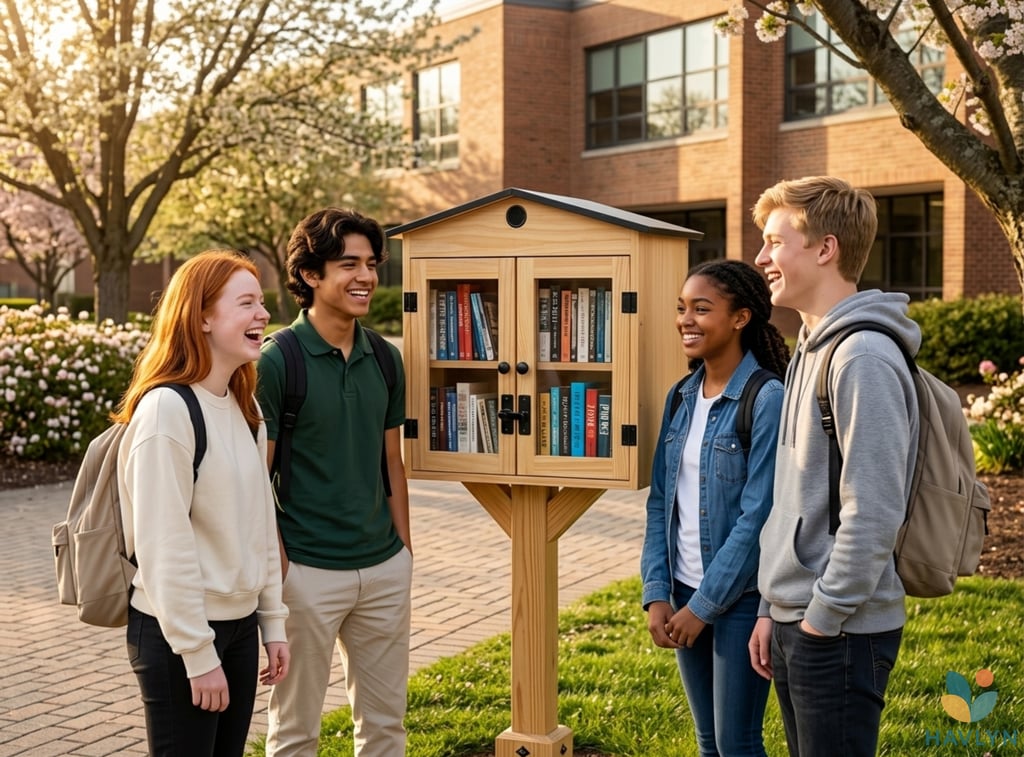
A school book-sharing box can be placed near the entrance, playground, library, parent pickup area, or another safe and visible location. Students can take a book, leave a book, discover something new, or share a story they have already enjoyed.
The idea is easy to understand, but the impact can be meaningful. A small outdoor library can support reading habits, involve families, and turn book sharing into a visible part of school life.
Why a Book Box Works Well in a School
Schools are already places of learning, but not every child has the same access to books at home. A community book box can help reduce that gap by giving students another simple way to find books outside the classroom.
It also makes reading feel less formal. A child who may not choose a book during a lesson might be curious when walking past a colorful outdoor box filled with stories. The choice feels personal. There is no grade, no test, and no pressure.
That matters. Reading for pleasure is closely connected to enjoyment, confidence, and access to books children actually want to read. A school book box supports that by creating a low-pressure place where students can explore books freely.
Who Should You Contact First?
A school book box project should begin with the right people.
Start with the school principal or head of school. They will usually need to approve the idea, the location, and the general rules. If the school has a librarian, media specialist, or reading coordinator, involve them early. They can help choose age-appropriate books and connect the project to literacy goals.
The parent-teacher association, parent-teacher organization, or parent group can also be an important partner. Parents can help raise funds, collect books, decorate the box, organize a launch day, and keep the library stocked throughout the year.
Depending on the school, you may also need to contact:
The school facilities or maintenance team
The district administration
The school board
The safety or security officer
The property manager, if the school does not own the site
Local community partners, such as libraries, churches, nonprofits, or nearby businesses
The goal is not to make the project complicated. It is simply to make sure the box is approved, safely installed, and easy to maintain.
How a Parent Association Can Help
A parent association is often the best driver for this kind of project.
Parents can present the idea to the school, explain the benefits, and offer to handle practical tasks. They can organize a book drive, ask families to donate gently used children’s books, or create a small budget for the box, installation materials, and a first set of books.
They can also help with long-term care. A simple volunteer schedule can make sure the box is checked regularly, books stay appropriate for the age group, and damaged items are removed.
This shared responsibility is important. A school book box works best when it does not become one teacher’s extra job. It should be a community project supported by the school, parents, and students together.
Choosing the Right Location at School
The location should be safe, visible, and easy to reach.
Good locations may include the front entrance, a covered walkway, the school library entrance, the playground edge, or the parent pickup area. The box should be placed where students and families naturally pass by, but not where it blocks traffic, emergency access, sidewalks, or doors.
If possible, choose a partially sheltered location. A wall, roof overhang, or covered entrance can help protect the box and the books from rain, sun, and snow.
The box should also be installed at a comfortable height for children. Younger students should be able to open the door and reach at least part of the selection safely.
What Books Should Go Inside?
The first selection should match the students who will use the box.
For an elementary school, include picture books, early readers, chapter books, and family-friendly stories. For a middle school, include graphic novels, age-appropriate fiction, nonfiction, biographies, and books connected to students’ interests.
It is helpful to include books in more than one language if the school serves bilingual families or English Language Learners. This can make the box feel more inclusive and useful to the whole school community.
Books should be clean, complete, and in good condition. Avoid damaged books, outdated textbooks, adult content, or anything that does not fit the age group.
A simple message can be placed inside:
Take a book. Share a book. Keep reading.
Getting Students Involved
Students are more likely to care about the book box if they help create it.
They can vote on the location, decorate the area around it, design bookmarks, write book recommendation cards, or help sort donated books. Older students can help younger students choose books or create reading challenges.
A class, student council, reading club, or service group can become the official “book box team.” Their role can be simple: check the box, keep it neat, and suggest new themes each month.
This gives students ownership. The library becomes something they helped build, not just something adults installed.
Expected Benefits for the School Community
A school book box can support several goals at once.
It can encourage daily reading, increase access to books, and help students discover stories outside formal assignments. It can also give families an easy way to bring books home, especially during weekends, holidays, and summer breaks.
The benefits are not only academic. A shared book box can create pride, cooperation, and a stronger sense of community. Students learn that books can be shared, reused, and enjoyed by others. Parents get a simple way to support literacy. Teachers gain another tool to encourage reading beyond the classroom.
Observed impact from school and community book-sharing programs suggests that these small libraries can be especially helpful where book access is limited. In one study connected to school communities, children in low-income schools and English Language Learners reported particularly strong increases in reading when they had access to a book-sharing box.
Keeping the Project Simple
A school book box does not need to be perfect from day one.
Start with a safe location, a clear approval process, a small group of volunteers, and a first collection of good books. Then observe how students use it.
Which books disappear first? Which grades use it most? Do families add books? Does the box need more picture books, graphic novels, or bilingual titles?
The answers will help the project grow naturally.
A durable outdoor community book box, such as the HAVLYN Community Book Box, can be a practical choice for schools because it is designed for outdoor sharing and can help organize books for different ages or reading levels. But the most important part is not the box itself. It is the habit it creates: making books easy to see, easy to take, and easy to share.
Final Thoughts
Installing a community book box at school is a small project with a clear purpose: help children read more, give families easier access to books, and create a visible culture of sharing.
With the support of the school, parent association, students, and local community, a simple book box can become more than a place to exchange books.
It can become a daily reminder that reading belongs everywhere — in the classroom, at home, and right outside the school door.
To learn more about our commitment to community projects, visit the HAVLYN Community Sharing Box Initiative