
How to Make Your Community Book Box Last Longer
Simple outdoor maintenance habits can help extend the life of a community book box. Smart placement, weather protection, regular varnishing, snow care, and quick inspections all help keep the box beautiful, durable, and welcoming year after year.
CARE & MAINTENANCE
The HAVLYN Team
3/30/20264 min read
How to Make Your Community Book Box Last Longer
Simple Maintenance Tips for Outdoor Book Sharing
A community book box is made to live outside. It welcomes neighbors, protects books, and becomes part of the landscape around your home, school, church, or community space.
But like any outdoor wooden structure, it needs a little care to stay beautiful and durable over time. Rain, sun, wind, snow, and temperature changes can slowly affect wood, finish, hardware, and books inside the box.
The good news is that maintenance does not need to be complicated. A few simple habits can help extend the life of your community book box and keep it looking welcoming year after year.
1. Choose the Most Protected Location Possible
The first way to make your book box last longer is to choose a smart location.
If possible, place it in a partially sheltered area. A spot near a porch, under a roof overhang, beside a fence, or close to a building can help reduce direct exposure to rain, harsh sun, and strong wind.
Your book box should still be visible and easy to access, but it does not need to stand in the most exposed part of your yard. Even a small amount of natural protection can make a difference over time.
Avoid low areas where water collects after rain. Standing water near the base or post can shorten the life of the structure. If you live in a cold climate, also think about snow buildup and snowplows before choosing the final location.
2. Add an Extra Coat of Marine Varnish
Most quality wooden community book boxes sold for outdoor use already come with a protective finish. For example, HAVLYN Community Book Boxes are protected with two coats of marine varnish, designed to provide outdoor protection for up to two years.
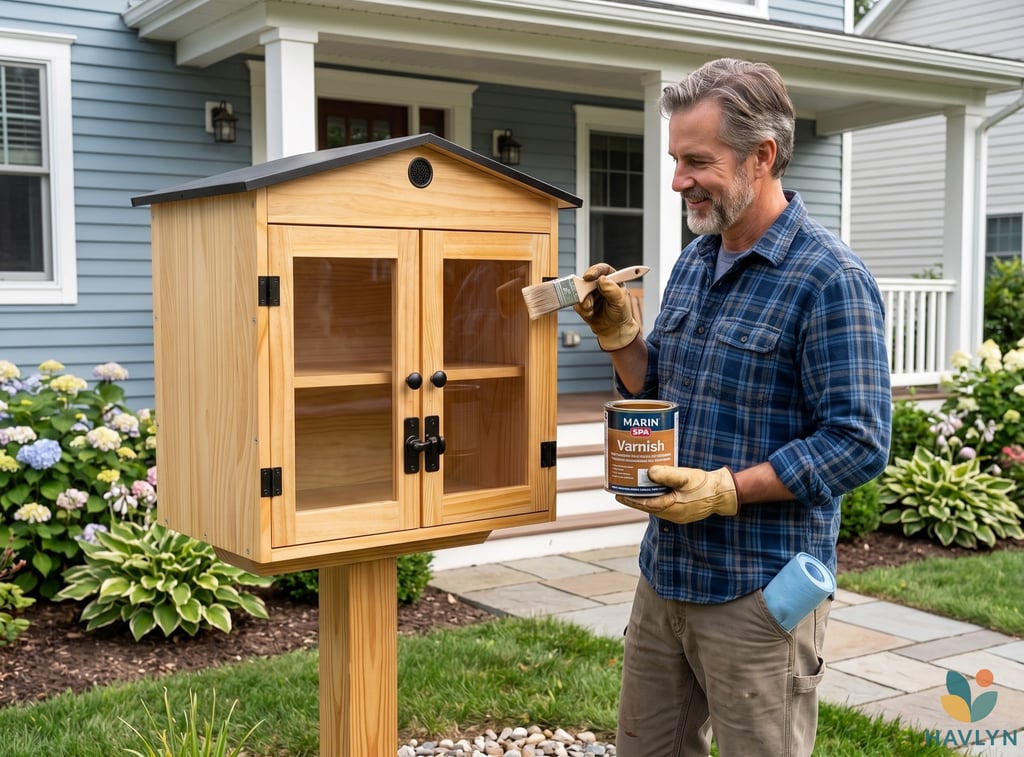
That said, adding an extra coat of marine varnish before installation is a smart way to extend the life of the wood even further. This is not because the original finish is weak. It is simply good outdoor maintenance, especially if the box will be exposed to rain, strong sunlight, humidity, or seasonal temperature changes.
Think of it like protecting a deck, garden bench, or outdoor table. The better the surface is protected from the beginning, the better it will age.
Choose a high-quality exterior marine varnish or spar varnish suitable for outdoor wood. Follow the manufacturer’s instructions carefully, especially for drying time, number of coats, sanding between coats, and weather conditions during application.
3. Reapply Varnish Regularly
Outdoor wood protection is not permanent. Sunlight, rain, and seasonal weather slowly wear down the finish.
For best results, plan to reapply a protective coat about once a year. This helps preserve the look of the wood, maintain water resistance, and keep your library looking clean and cared for.
You may need to reapply more often if your book box is in a very exposed location, near sprinklers, in a humid climate, or in an area with harsh winters.
A good rule is simple: if the wood starts to look dry, dull, faded, or less protected, it is time for maintenance.
4. Protect the Post or Mounting Support
The book box itself is important, but the support matters too.
If your library is installed on a wooden post, the post should also be protected with exterior varnish, stain, or outdoor paint. A standard 4x4 post is commonly used for this type of installation, but untreated or poorly protected wood can age quickly outdoors.
Apply at least two coats of exterior protection to the post before installation, especially on the lower part that may be close to the ground. If the post is set in the ground, make sure it is stable, level, and properly anchored.
A strong, well-protected post helps the entire installation remain safe and durable.
5. Keep Water Away from Weak Points
Water usually causes problems when it sits too long in the wrong place.
Check the roof, door area, bottom shelf, corners, and joints from time to time. Make sure water is not collecting inside the box or around the base.
If needed, you can seal small joints with outdoor-grade silicone to help reduce water infiltration. Use it carefully and neatly, especially around areas where rain could enter. The goal is not to trap moisture inside, but to prevent leaks in exposed areas.
Good airflow is also important. Do not block ventilation holes or airflow paths. Ventilation helps reduce condensation and keeps the inside of the box healthier for books.
6. Be Careful with Snow and Ice
Snow itself is not always a problem, but melting snow can be.
At the end of winter, or after a heavy snowfall, clear excess snow from the roof and around the base. When snow melts and refreezes, water can sit against wood longer than normal rain, which may increase wear over time.
If your area gets heavy snow, avoid placing the book box too close to the street, where snowplows may push snow, ice, salt, or debris against it.
A little winter maintenance can prevent a lot of long-term damage.
7. Keep the Inside Clean and Dry
The outside structure protects the books, but the inside also needs attention.
Check your book box regularly and remove wet, damaged, or moldy books. One damp book can affect the others, especially in humid weather.
A silicone mat on the bottom shelf can help protect books from occasional water drops and improve airflow underneath them. It also makes cleaning easier.
Avoid overcrowding the shelves. Books should be easy to remove, and air should be able to circulate. A neat, organized box is better for both visitors and the books inside.
8. Do a Quick Monthly Check
A five-minute check once or twice a month is usually enough.
Look at the doors, latch, roof, post, screws, and shelves. Make sure everything feels stable and secure. Wipe the windows or acrylic panels if needed, remove dirt or leaves, and check that the door closes properly.
After storms, strong wind, or heavy rain, take a quick look to make sure nothing has shifted or loosened.
Small maintenance steps are much easier than major repairs later.
Final Thoughts
A community book box can serve your neighborhood for years when it is installed thoughtfully and maintained regularly.
Place it in the most sheltered location possible, protect the wood with marine varnish, refresh the finish once a year, and check it regularly for water, snow, or loose parts.
With simple care, your book box can stay beautiful, useful, and welcoming season after season — continuing to share stories, kindness, and community for years to come.