
How a Community Book Box Can Encourage Reading
A community book box can promote reading by making books more visible, accessible, and easy to share in everyday neighborhood spaces. By offering free choice, regular discovery, and a simple sense of community, it can help children and families build stronger reading habits over time.
SCHOOLS & READING
The HAVLYN Team
6/1/20264 min read
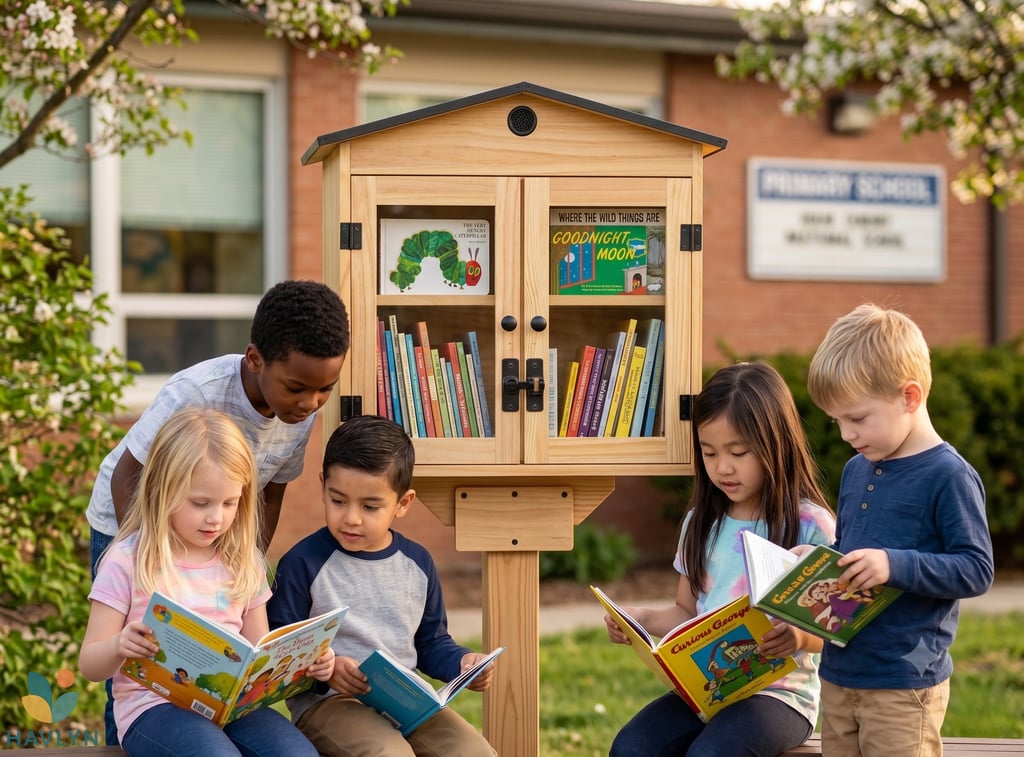
How a Community Book Box Can Encourage Reading
A Simple Way to Make Books More Visible, Accessible, and Inviting
Reading habits do not grow only in classrooms or libraries. They also grow in everyday places: on a walk home from school, during a weekend stroll, outside a neighbor’s house, near a playground, or in front of a community center.
That is what makes a community book box so powerful. It brings books into daily life.
A small outdoor book-sharing box may look simple, but it can help promote reading in a very practical way. It makes books easier to find, easier to take home, and easier to share with others. For children, families, and neighbors, it turns reading into something visible, familiar, and welcoming.
Access Comes First
Before someone can become a reader, they need access to books.
This sounds obvious, but it matters. Not every family has a large home library. Not every child visits a public library regularly. Not every neighborhood has easy access to books that can be taken home freely.
A community book box helps reduce that barrier. It places books where people already are. There is no membership card, no schedule, no checkout desk, and no pressure. A child can choose a book because the cover looks interesting. A parent can pick up a story during a walk. A neighbor can leave a favorite book for someone else to discover.
That kind of low-barrier access is one of the biggest strengths of a neighborhood book exchange.
Choice Makes Reading Feel Personal
Reading is easier to encourage when people feel they have a choice.
A child who is told to read may resist. But a child who opens a book box and finds a funny picture book, a comic, an animal story, or a mystery may become curious. That curiosity matters.
Community book boxes work well because they make discovery feel natural. People browse. They open the door. They look at titles. They take something that feels right for them.
There is no perfect selection for every neighborhood. Some children love graphic novels. Some families look for bedtime stories. Some adults enjoy mysteries, cookbooks, biographies, or gardening books. The best book box is one that reflects the people who use it.
When books match real interests, reading becomes less like a task and more like an invitation.
Reading Becomes Part of the Neighborhood
A community book box does more than distribute books. It makes reading visible.
When people see books being exchanged, they understand that reading belongs in the neighborhood. Children see adults donating books. Parents see other families stopping by. Neighbors notice which books disappear quickly. Over time, the box becomes a small sign that reading is valued here.
That visibility can be especially important for children. A book box shows that books are not only school materials. They are something people share, enjoy, recommend, and pass along.
It can also create conversations. A neighbor might say, “I left a great children’s book in the box yesterday,” or “My daughter loved the story we found there.” These small moments help reading become part of community life.
A Useful Support for Families
Families often want to encourage reading, but daily life is busy.
A community book box gives parents and caregivers another simple tool. It can provide fresh books between library visits, offer free reading material during weekends or school breaks, and give children a reason to choose something new.
It also helps build small home libraries. When children can keep a book they found, even temporarily, books become more present at home. A book on a nightstand or coffee table is easier to pick up than a book that is out of reach.
This does not replace schools, teachers, or public libraries. It supports them. A community book box is one more path between a child and a story.
A Strong Fit for Schools and Family Neighborhoods
Book boxes can be especially useful near schools, playgrounds, churches, community centers, and family neighborhoods.
In these settings, children and families already pass by regularly. A well-placed box can become part of daily routines: before school, after pickup, during a walk, or on the way to a park.
Schools can use a book box to support reading outside the classroom. Parent groups can help collect books. Teachers can suggest themes. Students can help organize children’s books or create recommendation cards.
The project does not need to be complicated. A clean, well-stocked box with age-appropriate books can already make a difference.
Keep the Selection Fresh
A book box encourages reading best when it feels alive.
If the same books stay inside for months, people may stop checking. But when the selection changes regularly, visitors come back to see what is new.
Rotate books often. Place children’s books where young readers can reach them. Remove damaged or inappropriate items. Keep a healthy mix of genres and reading levels. If one type of book disappears quickly, add more of that category.
A fresh, organized box sends a clear message: this place is cared for, and there is always something new to discover.
Make Reading Feel Welcoming, Not Formal
One of the best things about a community book box is that it does not feel formal.
There are no assignments. No grades. No due dates. No one asking questions. People can simply take a book and enjoy it.
That relaxed experience can help reach people who may not think of themselves as readers. A short book, a cookbook, a children’s story, a comic, or a beautiful picture book can all be entry points. The goal is not to make everyone read the same way. The goal is to make reading easier to start.
For some people, one small book from a neighborhood box may be the beginning of a new habit.
The Community Effect
Reading is personal, but book sharing is social.
A community book box invites people to give as well as receive. Someone finishes a book and passes it on. A family donates books their children have outgrown. A neighbor adds a favorite novel. A child leaves a book for another child to enjoy.
This creates a simple cycle of generosity. Books move from home to home instead of sitting unused on a shelf. People feel connected through what they share.
That community feeling can make reading more meaningful. A book is no longer just an object. It becomes a gift, a recommendation, and a small act of kindness.
Final Thoughts
A community book box will not solve every literacy challenge by itself. But it can do something very important: make books easier to access, easier to notice, and easier to share.
By placing books in everyday spaces, a neighborhood book exchange can support children, families, and casual readers in a simple, welcoming way.
Small reading habits often begin with small invitations. A community book box offers that invitation every day.