
Creative Alternatives to Book Sharing in Your Community Box
A community box can be used for much more than books, from seed exchanges and mini art galleries to recipe cards, puzzles, mugs, kindness notes, and blessing box essentials. The key is to choose a clear theme, keep the box clean and safe, and create a simple sharing experience that fits the needs and personality of the neighborhood.
COMMUNITY IDEAS
The HAVLYN Team
5/18/20265 min read
Creative Alternatives to Book Sharing in Your Community Box
More Ways to Share, Surprise, and Bring Neighbors Together
A community book box is a wonderful way to share stories. But books are only one possibility.
With a little creativity, the same simple idea can become a place to exchange seeds, DVDs, puzzles, art, mugs, small craft supplies, recipe cards, or everyday essentials. The heart of the project stays the same: people leave something useful, beautiful, or inspiring, and someone else discovers it at the right moment.
The goal is not to turn your community book box into a cluttered storage cabinet. The goal is to choose one clear theme — or a small seasonal addition — that fits your neighborhood and makes people smile.
Start with One Clear Idea
The best sharing boxes are easy to understand.
If someone opens the door and sees books, DVDs, seeds, mugs, dog treats, art, and canned soup all mixed together, the box may feel confusing. People may not know what belongs inside or what they are welcome to take.
Instead, choose a clear direction:
Take a book. Share a book.
Take a seed packet. Grow something.
Take a movie. Leave a movie.
Take a small artwork. Share your creativity.
A simple theme helps visitors participate in the right way. You can always change the theme later or create seasonal moments throughout the year.
Idea 1: A DVD or Movie Exchange
A DVD exchange can work well in neighborhoods where families, retirees, or movie lovers still enjoy physical media.
You can invite people to share family-friendly movies, documentaries, children’s films, or classic favorites. This can be especially fun during winter, holidays, or summer break.
Keep it organized by placing DVDs in one section of the box, separate from books. Check cases occasionally to make sure the discs are inside and not badly scratched. Avoid adult-only or inappropriate content if your box is in a family neighborhood, near a school, or close to a public walkway.
A small sign can help:
Share a movie. Take a movie. Please keep it family-friendly.
Idea 2: A Seed Exchange
A seed exchange is one of the most natural alternatives to book sharing.
Neighbors can leave extra flower, herb, or vegetable seeds for others to plant. It works especially well in spring, near community gardens, schools, or neighborhoods where people enjoy gardening.
To keep it useful, ask people to label seed packets clearly with the plant name and, if possible, the year. Small envelopes, plastic sleeves, or a simple organizer can help keep packets dry and easy to browse.
You can also add short notes such as:
Best planted in spring
Good for pollinators
Easy for beginners
Great for containers
A seed exchange turns the box into something more than a place to take. It becomes a small way to grow beauty, food, and connection around the neighborhood.
Idea 3: A Mini Art Gallery
A community box can become a tiny art gallery.
People can leave small drawings, postcards, mini paintings, painted rocks, handmade bookmarks, stickers, or little craft pieces. Visitors can take a piece they love and leave something creative in return.
This idea works especially well near schools, art studios, family neighborhoods, or creative communities. Children can participate easily, and adults often enjoy the surprise of finding something handmade.
Keep the art small, clean, and weather-safe. Use a simple label:
Take a little art. Leave a little art.
You can also create themes: flowers in spring, pumpkins in October, gratitude notes in November, winter scenes in December, or local landmarks during summer.
The result can feel playful and unexpected — like a tiny public gallery on your street.
Idea 4: A Puzzle or Activity Box
Puzzles, coloring pages, activity sheets, and small games can be a great fit for families.
This is especially useful during school holidays, rainy weekends, or community events. You can place small puzzles in resealable bags, include missing-piece notes when needed, or share printable activity pages for children.
The key is to keep everything clean and complete. A puzzle with half the pieces missing will frustrate people quickly. Small, simple activities work better than large games with many parts.
Good options include:
Small puzzles in sealed bags
Coloring pages
Word searches
Bookmarks to decorate
Simple card games
Children’s activity sheets
This kind of box can turn a quick stop into a small moment of discovery for kids.
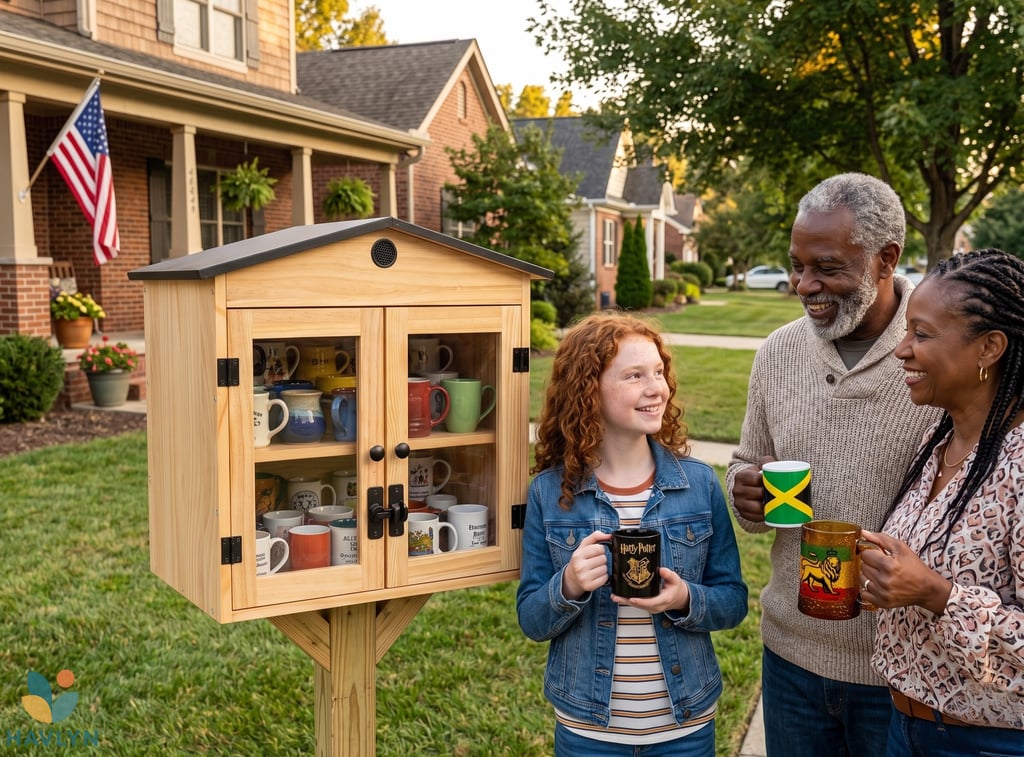
Idea 5: A Mug Exchange
A mug exchange is unusual, but it can be charming if done carefully.
People often have extra mugs at home: souvenir mugs, handmade mugs, funny mugs, seasonal mugs, or mugs they no longer use. A neighborhood mug exchange can give those objects a second life.
However, this idea needs more care than books. Only clean, unchipped mugs should be shared. Avoid cracked ceramic, broken handles, or anything unsafe. The box should not become crowded or heavy.
A mug exchange works best as a short seasonal event rather than a permanent theme:
Mug Swap Weekend
Take a Mug, Leave a Mug
Holiday Mug Exchange
It can be paired with tea bags, cocoa packets, or recipe cards if you want a cozy winter theme — but keep food items sealed and appropriate for outdoor storage.
Idea 6: A Recipe Card Exchange
A recipe exchange is simple, lightweight, and easy to maintain.
Neighbors can leave handwritten or printed recipe cards: family dishes, holiday cookies, garden recipes, budget meals, or favorite soups. This idea works beautifully with cookbooks, seed packets, or seasonal community themes.
You can place blank cards inside and invite people to contribute:
Share a favorite recipe. Take one home.
This kind of exchange creates connection without taking much space. A recipe can feel personal, generous, and local — especially when people add notes like “my grandmother’s soup” or “easy weeknight dinner.”
Idea 7: A Blessing Box
A blessing box is designed to share everyday essentials, such as non-perishable food, hygiene products, baby supplies, or basic household items.
This is one of the most meaningful alternatives to book sharing, but it also requires responsibility. Items should be unopened, clean, not expired, and safe for outdoor storage. Avoid anything that can leak, melt, spoil, or attract pests.
Good options include canned food, pasta, rice, soap, toothpaste, toothbrushes, deodorant, baby wipes, diapers, and feminine hygiene products.
If you use a community box for essentials, keep the message simple and respectful:
Take what you need. Leave what you can.
This type of sharing can support people quietly and immediately, without paperwork, appointments, or embarrassment.
Idea 8: A Kindness or Pep Talk Box
Not every exchange needs to be physical or practical.
A small box can hold encouraging notes, positive messages, poems, affirmations, or “pep talks” written by neighbors. Someone having a hard day might find exactly the words they needed.
This is a low-cost and high-impact idea. You can include blank cards and a pen in a weather-safe container, then invite people to write short messages for others.
Examples:
You are doing better than you think.
Take a deep breath. You’ve got this.
Someone in your neighborhood is cheering for you.
A kindness box can be used alone or as a small addition inside a book box.
Final Thoughts
A community box does not have to be only about books.
It can become a seed exchange in spring, a mini art gallery in summer, a puzzle stop during school breaks, a mug swap in winter, or a blessing box when the community needs practical support.
The best idea is the one that fits your neighborhood. Start small, keep it clear, and let people participate naturally.
Whether you share stories, seeds, art, recipes, or everyday essentials, the purpose is the same: to create small moments of generosity that make the neighborhood feel more connected.